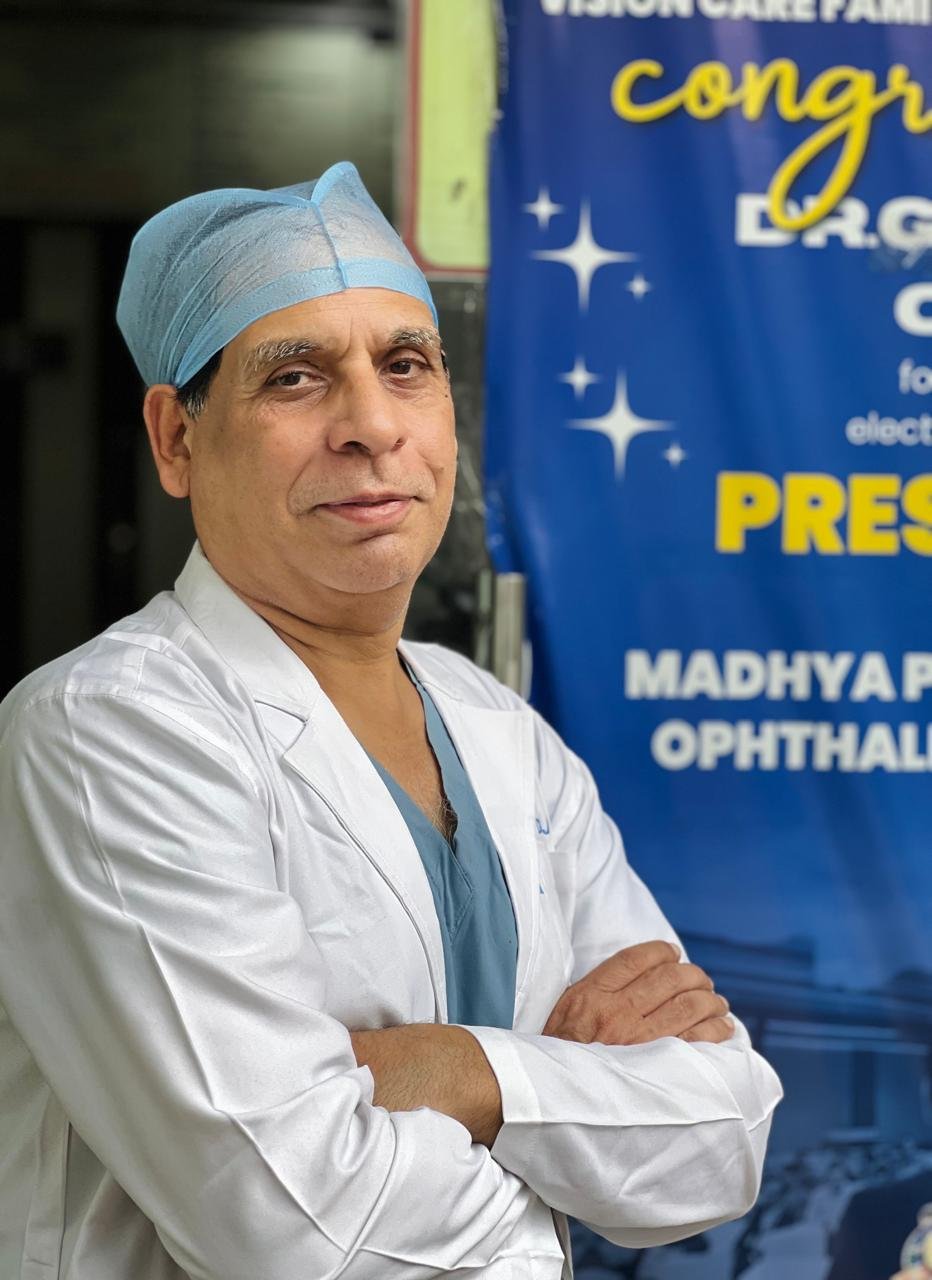
Fellowship-trained retina team in Bhopal

Retina Specialist Care in Bhopal

Meet fellowship-trained retina specialists Dr. Gajendra Chawla and Dr. Aashul Chawla for retinal detachment, diabetic retinopathy, macular disease, ROP, imaging, laser and vitreo-retinal surgery.

Quick answer

Who is the best retina specialist in Bhopal?

No independent medical authority names one doctor as universally “best.” Patients should compare retina fellowship training, experience, diagnostic access, treatment range, communication and follow-up. Dr. Gajendra Chawla is a senior retina specialist in Bhopal with MBBS, MS and FMRF qualifications, a two-year vitreo-retinal fellowship at Sankara Nethralaya, Chennai, and more than 36 years of ophthalmology experience. His work includes diabetic retinopathy, retinal laser, retinal detachment and complex vitreo-retinal care.

Meet the retina team

Retina-specific training, surgical experience and coordinated follow-up

Both specialists evaluate retinal disease and coordinate imaging, laser, injections, surgery opinions and follow-up according to the diagnosis.

Dr. Gajendra Chawla, senior retina specialist in Bhopal

Dr. Gajendra Chawla

MBBS, MS, FMRF - Senior Retina Specialist

More than 36 years of ophthalmology experience, a two-year fellowship in vitreo-retinal surgery at Sankara Nethralaya, Chennai, and a pioneering role in retina surgery and laser treatment in Bhopal since 1996.

Read verified profile

Dr. Aashul Chawla, vitreo-retina specialist in Bhopal

Dr. Aashul Chawla

MBBS, MS, DNB, FICO-1, MNAMS, FMRF

Vitreo-retina specialist trained at Sankara Nethralaya, with expertise in diabetic retinopathy, macular disease, retinal imaging and AI-assisted screening, including AI in Healthcare training from IIT Delhi.

Read verified profile

Conditions treated

Specialist care for medical and surgical retinal disease

The examination determines whether a condition needs observation, imaging, laser, injections, surgery or urgent referral.

Retinal tear and detachment

A tear can allow fluid under the retina. New flashes, many floaters or a curtain-like shadow require urgent examination.

Read urgent symptom guide

Diabetic retinopathy

Diabetes can cause leakage, swelling, abnormal vessels, bleeding or traction before noticeable vision loss.

View diabetic retina treatment

Macular degeneration

Age-related macular changes can affect reading and central detail. Distortion or a new central blur should be assessed.

Read macular degeneration guide

Retinopathy of prematurity

Premature infants may require time-sensitive retinal screening and follow-up based on birth history and neonatal guidance.

View ROP clinic page

Epiretinal membrane

A membrane on the macula can cause wavy lines, central blur or difficulty reading. OCT helps document its effect.

View retinal diagnostics

Macular edema and retinal vessels

Swelling, vein occlusion or retinal bleeding can reduce vision and may require imaging, injections, laser or monitoring.

Arrange retina evaluation

When to visit

When should I see a retina doctor?

See a retina doctor urgently for sudden flashes, many new floaters, a curtain or shadow, sudden blur, distorted central vision or vision loss after injury. A planned retina visit is also important for diabetes, high myopia, previous retinal tears, macular disease or unexplained visual changes because retinal disease can be painless.

Floaters or flashes

Sudden black spots, flashes of light or a curtain-like shadow may suggest a retinal tear or detachment and should be checked urgently.

Diabetic vision changes

Long-standing diabetes can damage retinal blood vessels. Annual retina screening is important even when vision feels normal.

Distorted central vision

Wavy lines, difficulty reading or central blur can be linked with macular degeneration, macular edema or other macular disease.

Sudden or unexplained blur

New blur in one eye, a dark patch or reduced side vision should be assessed promptly, even when there is no pain.

Bleeding or vessel blockage

Vitreous haemorrhage and retinal vein or artery problems can cause sudden haze, spots or marked loss of vision.

High myopia or previous retinal tear

People with significant short-sightedness, eye trauma, retinal surgery or a retinal problem in the other eye may need specialist follow-up.

Urgent retina warning signs

Flashes, many new floaters or a curtain-like shadow cannot wait.

A retinal tear or detachment may be painless. Contact an eye clinic urgently for sudden flashes, a shower of floaters, a dark curtain, rapid vision loss, new distortion or symptoms after an eye injury.

Call for urgent guidance

Retina evaluation

Tests are selected for the condition, not ordered as a package.

A retina consultation starts with symptoms, vision and a dilated examination. Imaging is added when it can clarify the diagnosis, document change or guide treatment.

  • Visual acuity, pupil response and eye-pressure assessment
  • Dilated fundus examination of the macula and peripheral retina
  • Fundus photography for documentation when useful
  • OCT cross-sectional imaging of the macula or optic nerve when indicated
  • Additional angiography or ultrasound when clinically required

Bring useful records

Carry prior scans, laser or injection details, operative notes, current medicines and recent diabetes, blood-pressure or kidney reports. This helps the specialist compare change over time.

Book on WhatsApp

Technology used

Diagnostics and treatment selected for the retinal problem

Technology supports the diagnosis; the retina specialist decides which test or treatment is appropriate after examination.

OCT imaging

Cross-sectional scans help assess the macula, retinal swelling, epiretinal membrane, macular hole and treatment response.

Fundus imaging and FFA

Retinal photographs document change. Fluorescein angiography may be selected to study leakage or retinal circulation.

Micro-incision vitrectomy

Vitreo-retinal microsurgery may be planned for detachment, non-clearing bleeding, traction or selected macular conditions.

AI-assisted screening

AI can support diabetic retinal image analysis, while a retina specialist reviews the result and remains responsible for decisions.

Explore AI eye screening

Longitudinal comparison

Repeat examination and imaging help show whether disease is stable, improving or progressing over time.

Treatment pathways

Retina treatment depends on the exact diagnosis and stage

Not every retinal condition needs a procedure. Your specialist should explain the expected benefit, alternatives, follow-up and urgent warning signs.

Observation and monitoring

Stable findings may be photographed or scanned and reviewed at an interval based on risk.

Retinal laser

Laser may be recommended for selected diabetic retinal disease, retinal tears or other vascular conditions.

Intravitreal injections

Medicines injected into the eye may be used for selected cases of macular swelling, diabetic eye disease or wet macular degeneration.

Vitreo-retinal surgery

Surgery may be considered for retinal detachment, non-clearing bleeding, traction, macular hole or other structural problems.

Systemic coordination

Control of diabetes, blood pressure, kidney disease and smoking risk can be an important part of retinal care.

Structured follow-up

Repeat examination and imaging help determine whether disease is stable or whether treatment should change.

What sets the clinic apart

Specialist-led retina care without one-size-fits-all packages

Patients should receive a clear diagnosis, treatment options and follow-up plan rather than a procedure chosen before examination.

1

Retina specialists, not general-only care

Fellowship-trained doctors direct the retinal diagnosis, treatment plan and follow-up.

2

Patient-first explanation

The team explains the condition, urgency, expected benefit, alternatives and warning signs in practical language.

3

Transparent estimates

Procedure costs depend on diagnosis and should be itemised after the clinical plan is confirmed.

Read cost guide
4

Coordinated follow-up

Examination, imaging, treatment and progress review are coordinated at the Bhopal clinic.

Retina FAQs

Questions patients ask before a retina appointment

Who is the best retina specialist in Bhopal?

There is no universal ranking that determines the best doctor for every retinal condition. Compare formal retina training, experience, available diagnostics, treatment scope and follow-up. Dr. Gajendra Chawla is a highly experienced option in Bhopal with MBBS, MS and FMRF qualifications, fellowship training at Sankara Nethralaya and more than 36 years of ophthalmology experience.

How do I know if I need a retina specialist instead of a general eye doctor?

A retina specialist is appropriate for diabetic retinal changes, retinal tears or detachment, macular disease, vitreous bleeding, retinal vessel blockage, high-risk ROP, or a condition that may need retinal laser, injections or vitreo-retinal surgery. Sudden flashes, many new floaters, a curtain-like shadow or rapid vision loss require urgent examination.

Is retina surgery painful and what is recovery like?

Vitreo-retinal surgery is performed with anaesthesia selected for the patient and procedure. Mild postoperative irritation can occur. Recovery varies by diagnosis and surgery; some patients need specific head positioning, eye drops and activity restrictions. The surgeon provides case-specific instructions.

How urgent is retinal detachment?

A suspected retinal detachment is an eye emergency. Sudden flashes, a shower of new floaters, a curtain or shadow, or rapid vision loss should be assessed urgently because delay can reduce the chance of preserving vision.

When should I see a retina doctor?

Seek urgent retina care for sudden flashes, many new floaters, a curtain or shadow, sudden or distorted vision, or vision loss after injury. Diabetes, high myopia, macular symptoms and previous retinal tears also warrant specialist follow-up.

Should people with diabetes see a retina specialist when vision is normal?

Yes. Diabetic retinal damage can develop before symptoms. Most people with diabetes need a comprehensive dilated eye examination at least once a year, with more frequent checks when advised.

How much does retina surgery cost in Bhopal?

Cost depends on the diagnosis, procedure, tests, medicines, surgical consumables, anaesthesia, admission requirements and insurance approval. A reliable estimate requires examination and a written treatment plan. For diabetic retinal care, see the diabetic retinopathy treatment cost guide.

Related reading

Learn more about retina symptoms

Book a retina consultation

Arrange specialist retinal evaluation in Bhopal

Address: E-7/378 Arera Colony, opposite Hanuman Mandir, 1100 Quarters, Bhopal 462016
Hours: Mon - Sat, 10 AM - 2 PM and 6 PM - 8:00 PM
Call: 0755 2468191 or +91 98932 76207