
AI-assisted imaging + retina specialist review

AI Eye Screening in Bhopal

Screen for early diabetic retinal changes with digital retina imaging, AI-assisted analysis and final clinical review by Dr. Gajendra Chawla or Dr. Aashul Chawla.

Plain-language answer

What is AI eye screening and why does it matter?

AI eye screening uses software to analyse photographs of the retina for patterns that may need attention. This is particularly useful in diabetes because diabetic retinopathy can progress without pain or obvious visual symptoms. The scan supports early detection, but it is not a diagnosis by itself: a retina specialist must interpret the result in the context of your eyes, health and image quality.

Same-visit pathway

How AI eye screening works at Vision Care

The process keeps technology in a supporting role while a qualified retina doctor remains responsible for clinical decisions.

01

Retinal imaging

A digital retinal camera photographs the back of the eye. Images are checked for clarity before analysis.

02

AI-assisted analysis

Software reviews the photographs for features that can be associated with diabetic retinal damage.

03

Specialist review

Dr. Gajendra Chawla or Dr. Aashul Chawla reviews the images and decides what the finding means clinically.

04

Same-day report

When image quality and clinic workflow allow, the report and next-step advice are discussed during the same visit.

Why AI + specialist review

AI-informed care led by fellowship-trained retina doctors

AI can sort visual patterns quickly; it cannot replace history-taking, examination or medical judgement. Chawla's Vision Care and Diabetic Eye Clinic combines AI support with experienced clinical review.

Dr. Aashul Chawla, retina specialist trained in AI for diabetic eye care

Dr. Aashul Chawla

Vitreo-retina specialist and AI-informed eye care

Trained in AI in Healthcare at IIT Delhi, with international exposure in AI for diabetic eye care and oculomics in Bangkok and Hong Kong. His retina training helps connect image-analysis output with the patient’s examination and treatment needs.

Read verified profile
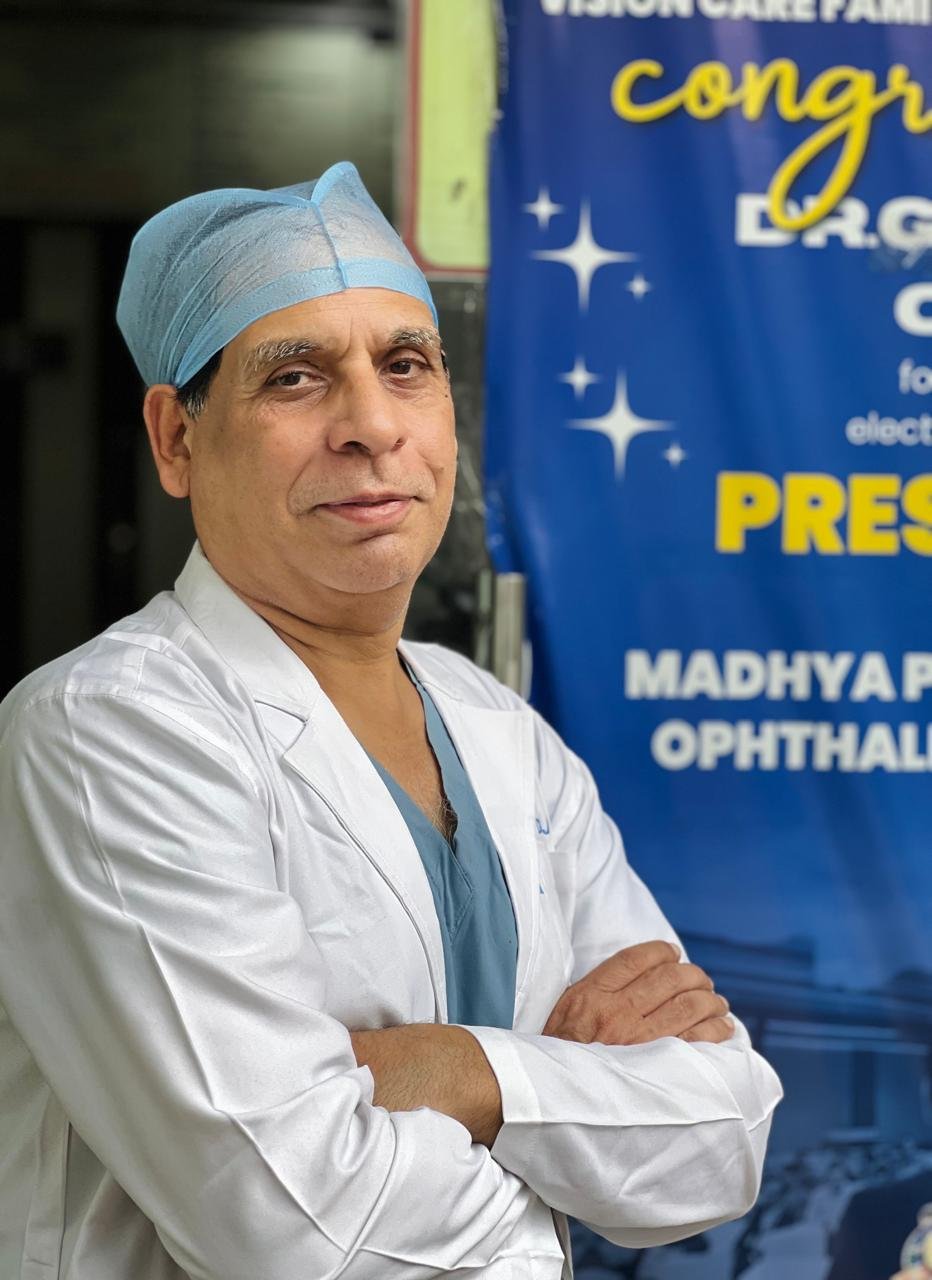
Dr. Gajendra Chawla, senior retina specialist in Bhopal

Dr. Gajendra Chawla

MBBS, MS, FMRF - Senior Retina Specialist

More than 36 years of ophthalmology experience, including a two-year vitreo-retinal fellowship at Sankara Nethralaya, Chennai. His specialist review links screening findings to examination, laser, injection or surgery planning when indicated.

Read verified profile

Who should be screened?

Do not wait for vision loss to check the retina

Screening frequency should be personalised, especially when more than one risk factor is present.

People with diabetes

Type 1 or type 2 diabetes can damage retinal blood vessels before symptoms begin. Annual dilated examinations are commonly advised.

People with hypertension

High blood pressure can affect retinal vessels and can increase risk when combined with diabetes or kidney disease.

Family or eye history

Tell the doctor about family eye disease, previous retinal treatment, high myopia, pregnancy or vision changes.

Adults aged 40+

Age increases the likelihood of several eye conditions. Screening choice should still be based on individual risk and examination.

Important limitation

Screening does not replace a complete dilated eye examination

A clear retinal photograph can be captured without dilation in some people. Dilation may still be needed when the pupil is small, the image is unclear, symptoms are present or the doctor needs to inspect the peripheral retina. A normal automated output also does not explain every cause of blurred vision.

  • Non-contact retinal photography does not touch the eye
  • The camera flash may be noticeable and repeat images may be needed
  • OCT or another test is added only when clinically useful
  • Urgent flashes, floaters, a dark curtain or sudden vision loss need direct examination

Prepare for your visit

Bring your diabetes medicines, recent HbA1c if available, prior retinal scans or injection records, and sunglasses in case dilation is advised.

Ask about screening

AI screening FAQs

Questions patients ask before a diabetic retina scan

Is AI eye screening accurate?

AI systems can help identify retinal images that may show diabetic retinopathy, but performance depends on the system and image quality. At Chawla's Vision Care and Diabetic Eye Clinic, AI is decision support: a retina specialist reviews the images and decides whether examination, repeat imaging or treatment is needed.

How long does AI eye screening take?

Retinal photography itself is usually quick. Allow extra time for registration, vision checks, image-quality review and the specialist assessment. The clinic aims to complete imaging and guidance on the same visit when possible.

Does AI eye screening hurt or need pupil dilation?

Retinal photography is non-contact and does not touch the eye, although the camera flash may be noticeable. Some people can be photographed without dilation, while others need dilating drops because of a small pupil, unclear image, symptoms or the need for a complete retinal examination.

How much does AI eye screening cost in Bhopal?

The total depends on whether the visit includes consultation, dilation or additional imaging such as OCT. Contact the clinic for the current fee and ask what is included before booking. See the diabetic retinopathy cost guide if treatment has already been advised.

How often should I get screened for diabetic retinopathy?

Most people with diabetes need a comprehensive dilated eye examination at least once a year. Shorter intervals may be advised during pregnancy, with poor diabetes control, existing retinal changes or after treatment.

Book AI eye screening

Arrange a diabetic retina scan in Bhopal

Address: E-7/378 Arera Colony, opposite Hanuman Mandir, 1100 Quarters, Bhopal 462016
Hours: Mon - Sat, 10 AM - 2 PM and 6 PM - 8:00 PM
Call: 0755 2468191 or +91 98932 76207