Screening or everyday concerns
Arrange an examination after a failed vision screen, or for persistent squinting, closing one eye, unusual head posture or difficulty seeing the board.
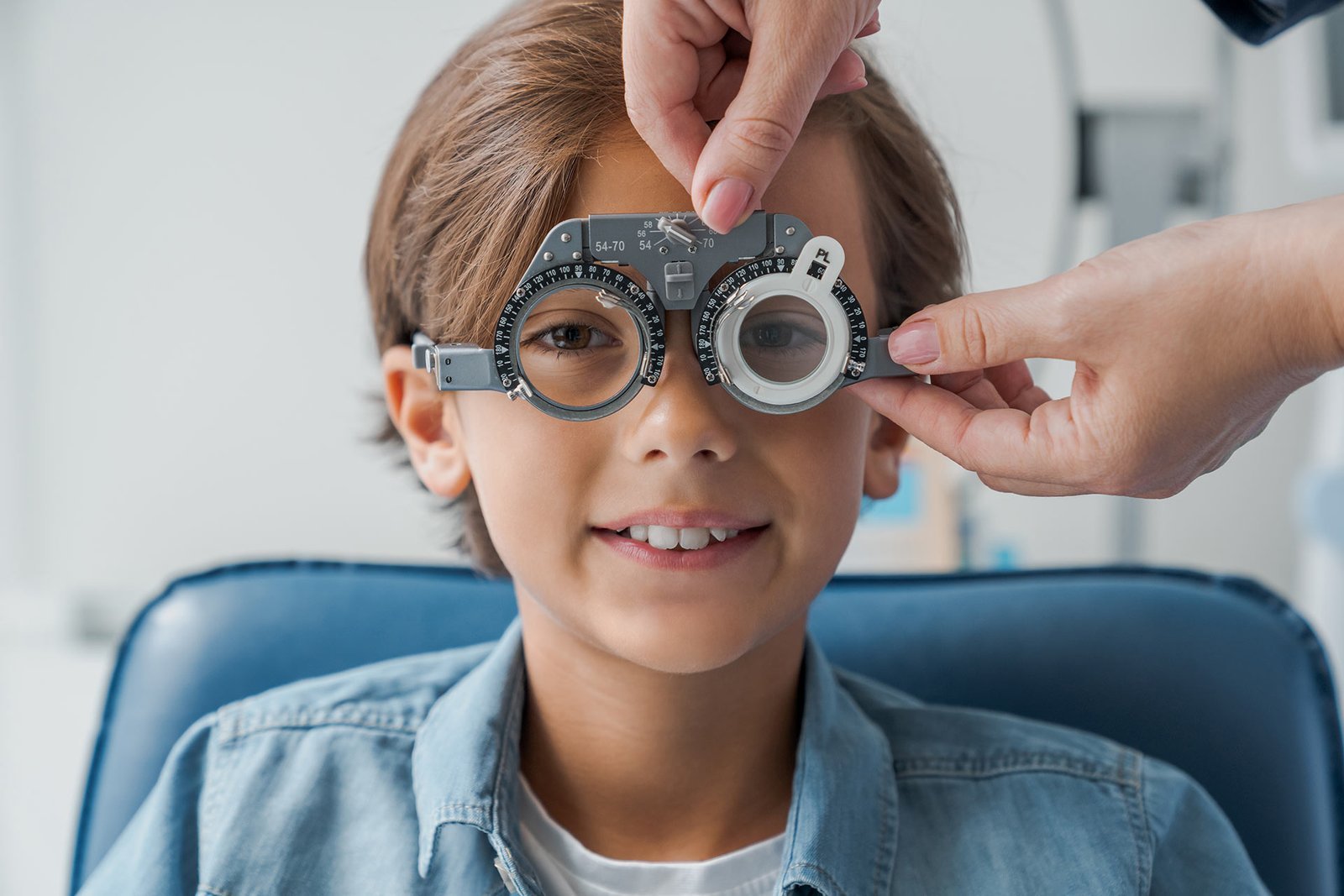
Children's vision and eye health
Children may not realise that one eye sees less clearly than the other. Chawla's Vision Care provides an initial eye consultation for vision concerns, spectacle needs and eye-alignment assessment, with specialist referral when needed.
A white reflection in a child's pupil, seen directly or in photographs, needs urgent eye assessment. Sudden vision loss, injury, severe pain or a new squint with headache or vomiting should not wait for a routine checkup.
Understanding the condition
A children's eye examination looks at vision in each eye, focusing, alignment and eye health. Amblyopia, often called lazy eye, can develop when clear vision does not develop normally in one or both eyes. Early assessment matters even when the eyes look normal.
When to seek advice
Arrange an examination after a failed vision screen, or for persistent squinting, closing one eye, unusual head posture or difficulty seeing the board.
A squint may be constant or intermittent. Bring photographs if it is not always visible. Assessment considers alignment and the vision of each eye.
A prescription difference between eyes can affect visual development without obvious complaints. Check the prescribed glasses and follow-up schedule.
Patient guidance: AAPOS: amblyopia.
Your assessment
Age-appropriate methods use fixation, pictures or other responses. Eye drops may be used to relax focusing for a more reliable prescription and to examine inside the eyes. Ask about visit length and temporary blur or light sensitivity after drops.
Treatment planning
The prescription and wearing schedule depend on the findings. Discuss fit, comfort and how to manage wear at school and home.
Glasses may be part of treatment. Patching or other treatment must be prescribed and monitored; do not start patching on your own. Some children need a dedicated pediatric or squint specialist.
Premature babies may need retinal screening on a neonatal team's schedule. A general children's checkup does not replace ROP screening or its follow-up appointments.
Patient guidance: AAPOS: strabismus.
Continuing care
Tell the doctor about difficulty wearing glasses or completing prescribed treatment. Reviews compare vision in each eye and adjust the plan. The interval depends on the child's age, diagnosis and response, not just whether symptoms seem better.
Ask whether the first consultation includes refraction and dilation, and whether glasses, additional testing or specialist reviews are separate. Amblyopia and squint management can involve several visits, so discuss continuing care as well as the first appointment.
Confirm the relevant specialist, tests and procedure location with the clinic before scheduling treatment.
Visit Vision Care
E-7/378 Arera Colony, opposite Hanuman Mandir, 1100 Quarters, Bhopal 462016.
Monday to Saturday: 10:00 AM - 8:00 PM. Sunday closed.
Mobile calls: +91 98932 76207. WhatsApp: +91 96850 57723.
Dr. Gajendra Chawla
Senior Retina Surgeon & Ophthalmologist
Dr. Aashul Chawla
Vitreo-Retina Surgeon & Ophthalmologist
The eye examination guides further care and referral to an appropriate subspecialist when needed.
Pediatric Eye Care FAQs
Yes. Examinations can use age-appropriate responses rather than letters.
Screening identifies children who may need a full examination. A failed screen or continuing concern needs follow-up.
Sometimes. Drops can improve prescription measurements and allow an examination inside the eyes. The doctor decides what is needed.
No. The diagnosis, eye to patch and schedule must be prescribed and reviewed.
No. Keep the specific screening dates set by the neonatal or retina team, even if your baby appears to see normally.
Patient references
This guide supports a consultation; individual treatment depends on examination findings.