Age above 40 or family history
Risk rises with age and is higher when a close family member has glaucoma.
Optic nerve care and monitoring
Glaucoma can progress silently. Eye pressure checks, optic nerve evaluation, OCT and visual field testing help confirm risk and guide medicines, laser advice, surgery referral and long-term monitoring.
Direct answer
Management may use prescription eye drops, laser or surgery to lower eye pressure. The right plan depends on glaucoma type, disease stage, target pressure, the other eye, medical history and response over time. Regular OCT and visual field comparisons are as important as the pressure number.
Who should visit
Glaucoma is often painless in early stages, so screening is important even when vision feels normal.
Risk rises with age and is higher when a close family member has glaucoma.
Patients told they have high pressure, cup-disc changes or optic nerve thinning need structured follow-up.
These conditions can increase risk and should be discussed during an eye examination.
Diagnosis
The doctor may advise tonometry, optic nerve examination, OCT, visual field testing, gonioscopy and corneal thickness measurement. Treatment is planned around disease stage and target eye pressure.
Bring any previous eye-pressure readings, scans, field tests, glaucoma drops and family history information.
Book on WhatsAppTreatment options
The purpose of treatment is to reach and maintain an eye pressure at which further optic nerve damage is less likely.
Different medicines reduce fluid production or improve drainage. Correct technique, regular use and side-effect review matter.
Laser may improve drainage or treat selected angle-closure mechanisms. Suitability and expected duration of effect vary.
Surgery may be advised when medicines and laser do not achieve a safe target pressure or when disease is advanced.
Pressure, optic nerve appearance, OCT and visual fields are compared over time to identify progression.
Tell the doctor about asthma, heart disease, pregnancy and all current medicines before starting or changing drops.
Sudden severe pain, redness, blurred vision, halos, headache, nausea or vomiting requires immediate eye care.
Monitoring plan
A target range is individual; a reading considered acceptable for one person may be unsafe for another.
Repeat scans can show whether nerve-fibre thickness is stable or changing, when image quality is reliable.
Field tests measure functional vision loss and require repeatable, attentive patient responses.
Gonioscopy identifies the drainage angle type, while corneal thickness helps interpret pressure readings.
Doctor-led care
Many patients have glaucoma along with diabetes, cataract or retinal disease. Vision Care evaluates the eye as a whole instead of treating pressure numbers alone.
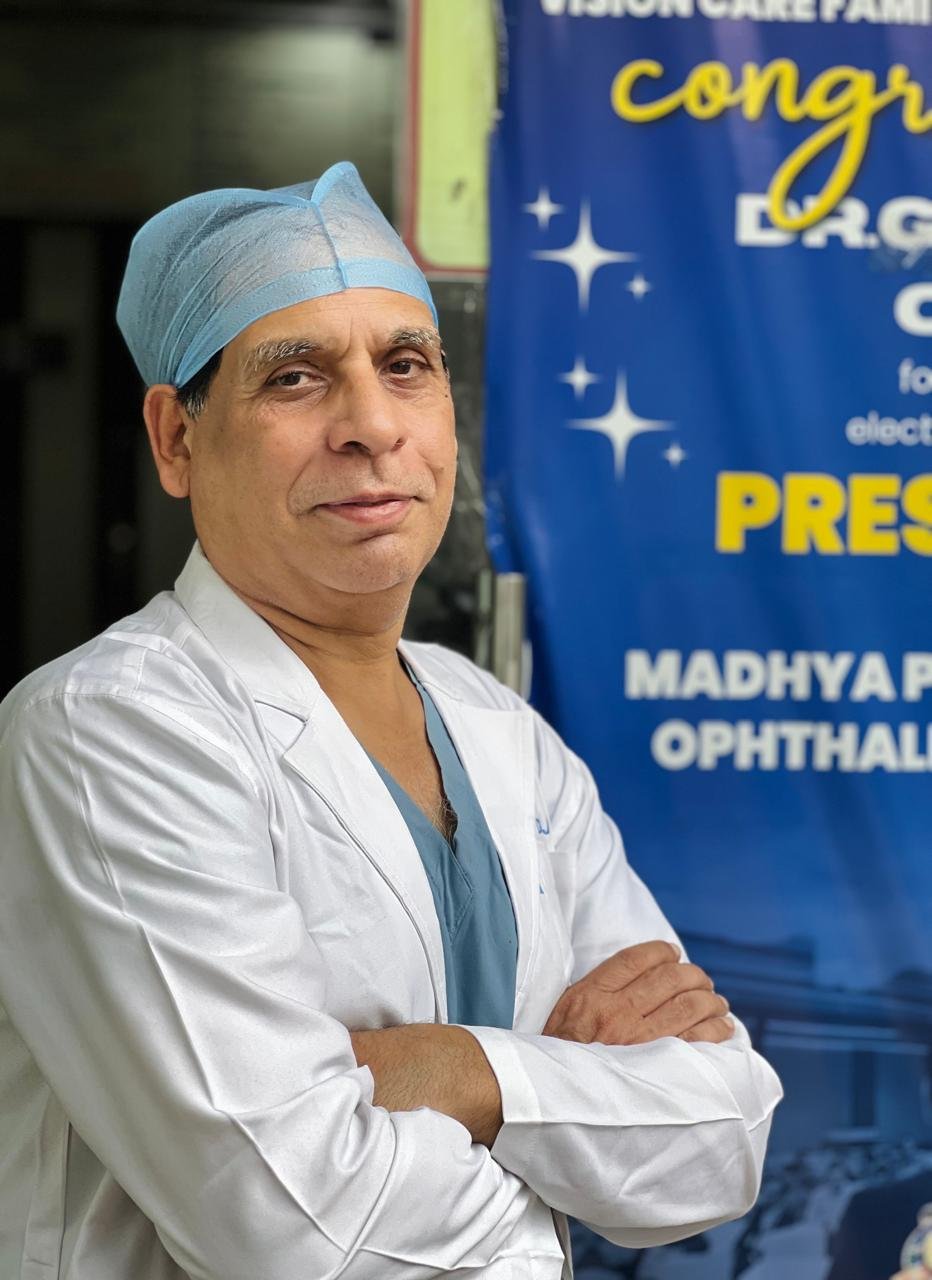
Senior Ophthalmologist, Retina & Laser Specialist
Decades of ophthalmology experience with expertise in retina, laser and cataract care, helpful in complex patients with overlapping eye disease.
Read profile
Modern Retina, Cataract & Screening Care
Supports structured evaluation workflows, diabetic eye screening and follow-up planning, including AI in Healthcare training from IIT Delhi.
Read profileRelated care
Read the glaucoma diagnosis and monitoring guide. Glaucoma patients may also need an eye checkup, diabetic eye screening or cataract evaluation.
Glaucoma FAQs
Damage already present cannot usually be reversed, but treatment can lower eye pressure and reduce the risk of further vision loss. Monitoring continues even when pressure is controlled.
Assessment may include pressure measurement, dilated optic nerve examination, OCT, visual field testing, gonioscopy and corneal thickness measurement. One pressure reading is not enough.
No. Some people develop damage at pressure readings within the usual range, while others have high pressure without damage. The optic nerve, field, cornea, angle and change over time matter.
Treatment can include prescription drops, laser or surgery depending on type, stage, target pressure and response. The doctor also sets an OCT and visual-field monitoring schedule.
Sudden severe eye pain, redness, blurred vision, coloured halos, headache, nausea or vomiting can indicate acute angle closure and require immediate eye care.
Do not stop or change glaucoma medicine without medical advice. Pressure often rises when treatment is stopped, and glaucoma can progress without symptoms.
Glaucoma evaluation in Bhopal
Address: E-7/378 Arera Colony, opposite Hanuman Mandir, 1100 Quarters, Bhopal 462016
Hours: Mon - Sat, 10:00 AM - 8:00 PM
Call: 0755 2468191 or +91 98932 76207