Lens category
Monofocal, toric, multifocal and EDOF lenses have different optical goals, suitability and prices.
2026 patient pricing guide
Compare lens and package factors, understand insurance, and know what to ask before choosing cataract surgery for one or both eyes.
Direct answer
Published Indian examples range from standard monofocal packages around ₹20,000 to premium toric, multifocal or EDOF packages above ₹1 lakh per eye. A 2025 CGHS Tier-Y benchmark for phaco or micro-incision surgery, excluding the lens, is ₹13,005 at a non-NABH facility and ₹15,300 at an NABH facility. These figures are public orientation points, not Vision Care's tariff or a guaranteed patient quote. A reliable estimate requires examination, biometry and a written lens recommendation.
Lens and package guide
The ranges below are broad published package examples. Your estimate can fall outside them because the exact lens, eye condition, tests and package inclusions differ.
| S.No. | Lens or package category | Published planning range | What to discuss |
|---|---|---|---|
| 1 | Standard Indian monofocal lens | About ₹20,000-₹35,000 per eyePublished hospital examples, not a Vision Care quote. | Usually targets clear vision at one main distance. Spectacles may be required for reading, distance or astigmatism. |
| 2 | Enhanced, imported monofocal or toric lens | About ₹35,000-₹70,000 per eyeLens model and cylinder correction strongly affect price. | Toric lenses may reduce corneal astigmatism in suitable eyes. Accurate measurements and alignment are important. |
| 3 | Multifocal, EDOF or premium toric lens | About ₹50,000-₹1.2 lakh+ per eyeSome published premium packages exceed this range. | May reduce dependence on spectacles at more than one distance, but glare, halos and retinal or corneal suitability must be discussed. |
| 4 | CGHS Tier-Y phaco or MICS benchmark | ₹13,005-₹15,300 excluding IOLOfficial 2025 beneficiary reimbursement benchmark; not a private self-pay tariff. | Eligibility, approved lens amount, facility category and scheme rules determine the payable or covered amount. |
Why cost changes
Monofocal, toric, multifocal and EDOF lenses have different optical goals, suitability and prices.
Phacoemulsification, micro-incision surgery and selected manual techniques use different resources and plans.
Biometry, corneal measurements, retinal evaluation and other tests may be needed for safe planning.
Glaucoma, corneal disease, retinal disease or weak lens support can alter the lens choice and surgery.
A headline amount may exclude the lens, medicines, tests, consumables or follow-up visits.
Policy limits, room category, network status and lens caps can change the out-of-pocket amount.
Estimates are normally per eye, and surgery is planned separately for each eye.
Choosing a lens
The surgeon should match the lens to your corneal measurements, retina and optic nerve health, visual priorities, occupation, night driving and willingness to use spectacles. Premium lenses can be unsuitable when other eye disease may limit image quality.
Carry current spectacles, previous eye reports, medicine and allergy lists, diabetes or blood-pressure records, and insurance or Ayushman documents.
Book cataract evaluation on WhatsAppCompare estimates fairly
Ask for the manufacturer, model, optical category and whether astigmatism correction is included.
Confirm who will operate and whether theatre, anaesthesia and routine consumables are included.
Ask which preoperative tests, drops, postoperative medicines and protective eyewear are separate.
Clarify included visits, emergency contact, extra procedures and costs not covered by the package.
Surgeon-led planning
Lens selection follows a complete eye examination rather than a price list alone. Both doctors assess cataract patients and explain realistic visual goals.
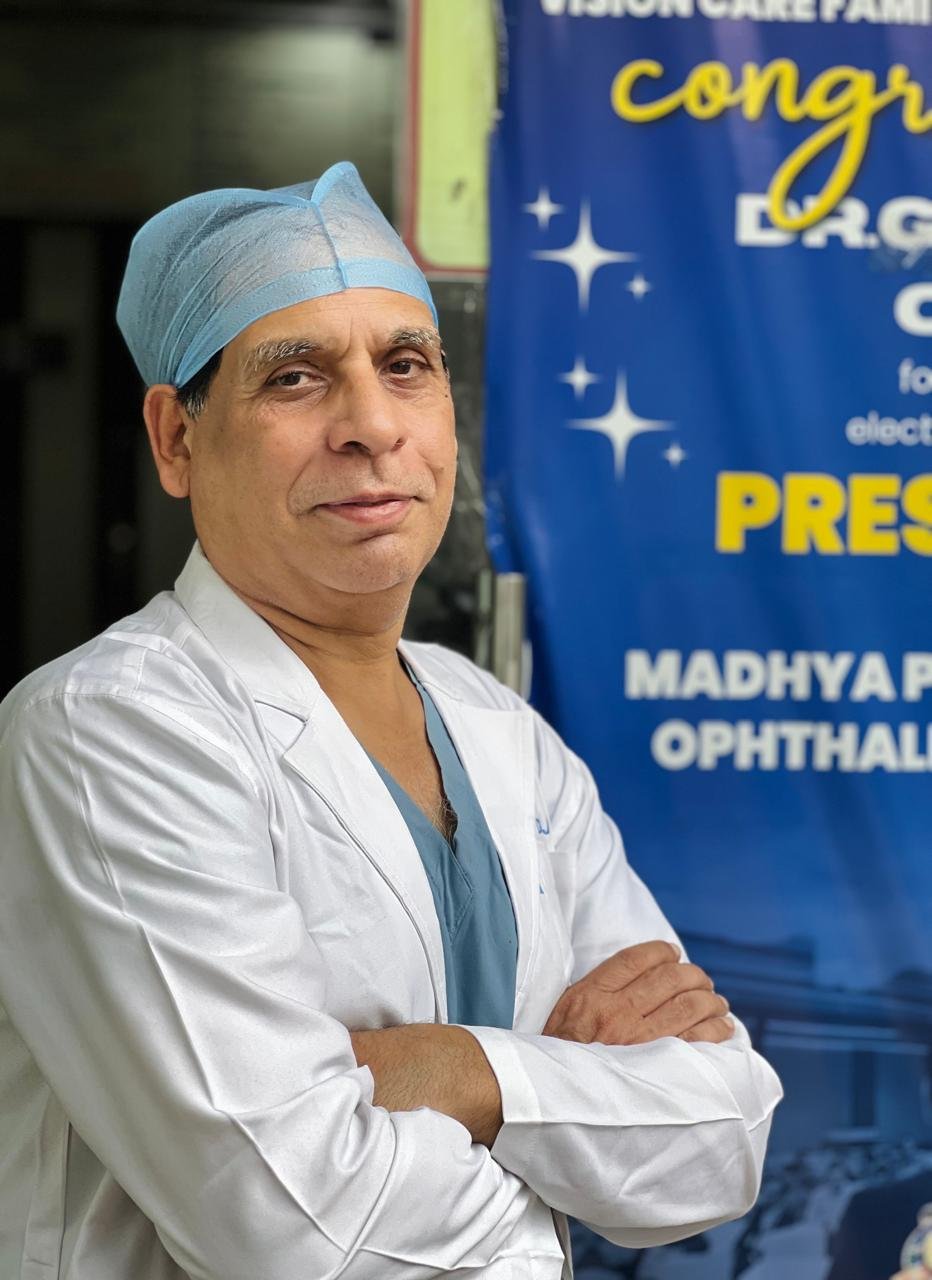
MBBS, MS, FMRF
Senior ophthalmologist with more than 36 years of experience in cataract and retinal care, including fellowship training at Sankara Nethralaya, Chennai.
Read profile
MBBS, MS, DNB, FICO-1, MNAMS, FMRF
Ophthalmologist and vitreo-retina specialist involved in cataract assessment, retinal evaluation and evidence-based surgical planning.
Read profileCost FAQs
There is no single safe price before examination. The total depends mainly on the technique, intraocular lens, tests, medicines, anaesthesia, package and insurance. Published Indian examples range from standard monofocal options around ₹20,000 to premium lens packages above ₹1 lakh per eye, but these are not Vision Care's tariff.
No. Suitability depends on eye health, corneal measurements, retinal condition, glaucoma, lifestyle and visual priorities. A premium lens may not suit every eye, and spectacles can still be required after any lens.
Many policies and government schemes cover eligible procedures, subject to diagnosis, network status, terms, waiting periods, package limits and pre-authorisation. Lens upgrades and outpatient tests may not be fully covered.
Estimates are normally prepared per eye. The eyes are usually assessed and operated separately, and each eye can need a different lens or timing.
Ask whether the quote includes surgeon and facility fees, exact lens model, routine tests, consumables, anaesthesia, medicines and postoperative visits. Request exclusions in writing.
The clinic can explain current package categories, but an exact recommendation requires examination and biometry. These measurements help choose a suitable lens and identify conditions that may affect surgery.
Patient-specific estimate
Address: E-7/378 Arera Colony, opposite Hanuman Mandir, 1100 Quarters, Bhopal 462016
Hours: Mon - Sat, 10:00 AM - 8:00 PM
Call: 0755 2468191 or +91 98932 76207