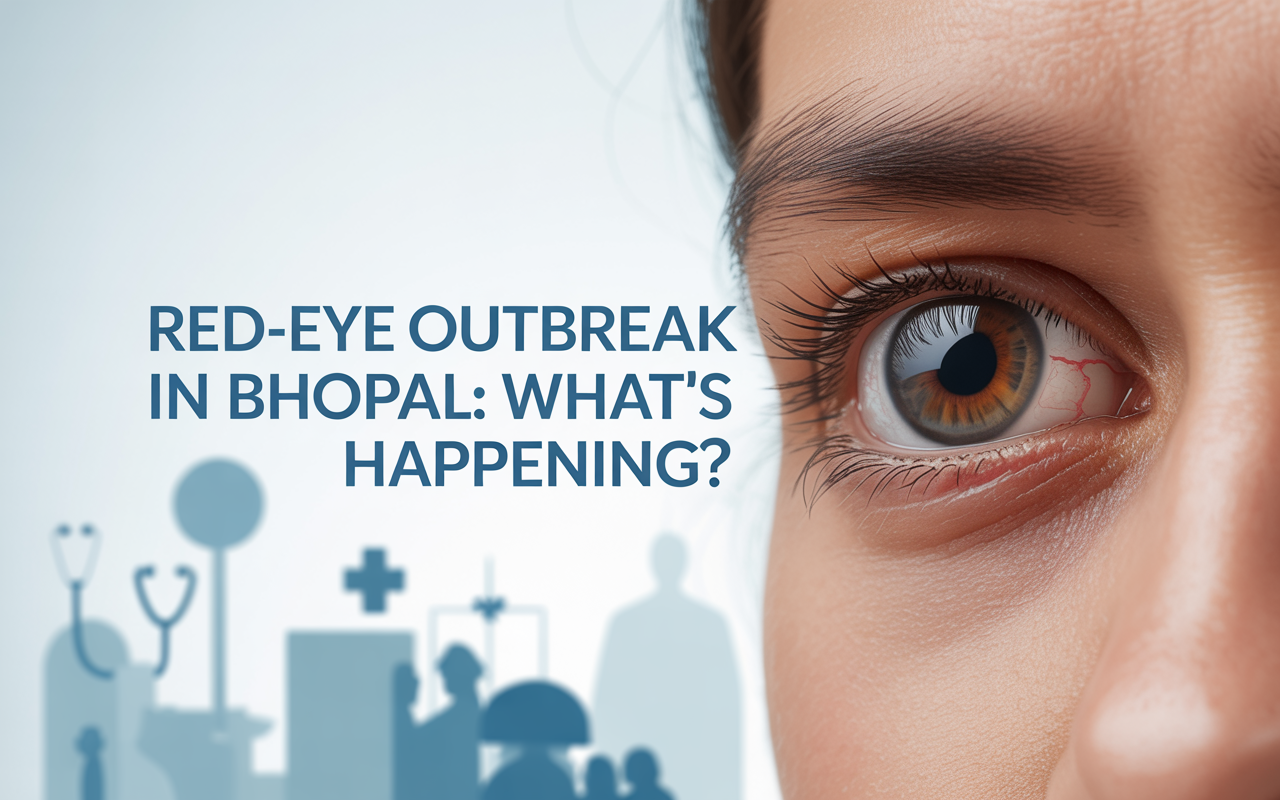
Eye hospitals and outpatient departments have reported more people arriving with redness, watering, itchiness, swelling, and eye discharge. Many cases involve school children, while adults are also affected by exposure to dust, dirt, weather changes, and close contact.
Why cases are rising
Doctors have linked the increase to hot weather, humidity, sudden dry and dusty breaks after rainfall, strong sunlight, construction dust, and pollution. These conditions can irritate the eye surface and make infections easier to spread.
Symptoms to watch for
- Redness and watering
- Itching, discomfort, or foreign body sensation
- Swelling around the eyelids
- Sticky or watery discharge
- Light sensitivity or blurred vision
What not to do
Avoid using over-the-counter steroid drops or creams without an eye doctor’s advice. In some cases, unsupervised steroid use can worsen infection and lead to serious corneal complications such as microbial keratitis.
Prevention tips
- Wash hands frequently and avoid touching or rubbing the eyes.
- Do not share towels, handkerchiefs, cosmetics, or eye drops.
- Keep infected children home until symptoms improve and an eye specialist advises return.
- Use protective eyewear outdoors in dusty areas.
If redness is severe, vision is affected, pain is present, or symptoms do not settle quickly, visit an eye specialist for a proper diagnosis.